
War Prayers
A brief and mythical history of the ultimate trade

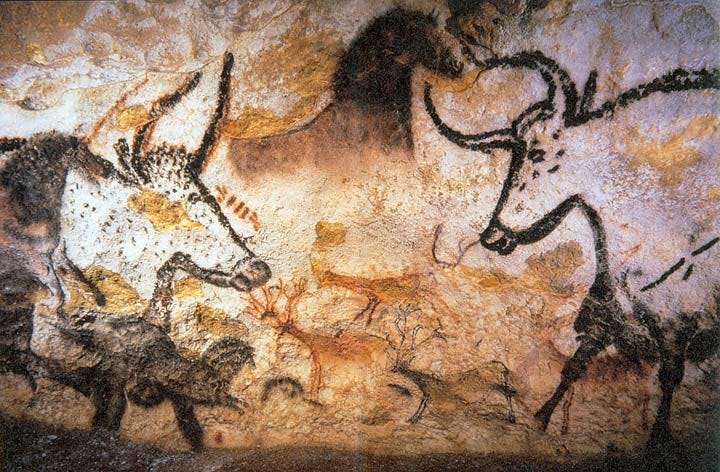
On the walls of a cave in Lascaux, France, unknown hands pressed crushed charcoal and ochre onto the primitive canvas some 15-20,000 years ago. Sealed in their tomb for millennia, they waited until the 20th century to be seen by human eyes for the first time since the ending of the Last Glacial Maximum. By random chance a boy looking for a lost dog uncorked a golden age of creative flourishing, a gallery eons in the making. When Pablo Picasso first saw the graceful silhouettes of dancing aurochs and cascading horses, he is reported to have said “We have learned nothing.”1
Although the veracity of the quote is dubious and quite likely a fabrication, it’s not hard to imagine the old master saying such a thing. We stand on the shoulders of giants; we are shaped just as much by the dreams of our ancestors as the detritus of their achievements, piling up like so many stalagmites on the ruins of history. To get a glimpse of the visions that haunted his predecessors would have been a powerful sight for someone like Picasso. The feral grace of the line. The sublime ease with which they showed the dance of the bulls in the depth of the field, inventing the use of perspective thousands of years before the Renaissance. Perhaps the art of painting reached its zenith on the walls of a cave in Paleolithic Europe. Perhaps their prayers and visions invaded our dreams long before some intrepid explorer ever moved an uprooted tree and revealed to us the roots of our artistry.
It’s strange to consider that painting may have peaked at a time when humans had scarcely even gained a foothold on the top of the food chain. The works of our Aurignacian and Magdelanean ancestors are notable mostly for the lack of them. Great halls of bulls and horses, but vanishingly little of the human form, outside a few surreal portraits and a multitude of hand prints. In the lost dictates of their cosmology they may have thought of themselves as small fish in the sea of creation, with only the slightest foreshadowing of the vaunted legions that would come to dominate the globe. If there were wars of conquest in the Magdalenean era, we don’t see them on the walls of Lascaux.
And yet, hidden within his apocryphal musings, Picasso may have intimated something else in his theory of our ignorance, something more troubling. A biblical understanding of violence marks Cain as the progenitor of murder, but the study of prehistory puts a much earlier vintage on the arts of war. From Homer to Cormac McCarthy, writers and philosophers have endeavored to push the date of its inception further and further back in time. In Blood Meridian, McCarthy’s iconic antagonist Judge Holden makes clear the author’s central thesis, in the midst of a lecture to the men he leads on a campaign of scalphunting and plunder
War was always here. Before man was, war waited for him. The ultimate trade awaiting the ultimate practitioner.
Many millenia after Lascaux Cave was sealed off and the old masters long gone, the acolytes of the art of war were forging their way to the mastery of the rough trade heralded by Judge Holden. In that great expanse of time the people of Egypt, Assyria and Mycenaean Greece fueled their empires with the twin engines of writing and war. The Bronze Age Collapse shook the nascent civilizations of the Mediterranean to their foundations. In the years after the collapse, the rhapsodes of Greece emerged from their ruin and spun the stories that would become the Iliad and the Odyssey. Art and violence are powerful catalytic forces. If the visual mind awakened deep in a Paleolithic cave, the strange symbols cribbed from Phoenician sailors rekindled Aegean civilization and birthed the soul of poetry from the crucible of war and apocalypse.
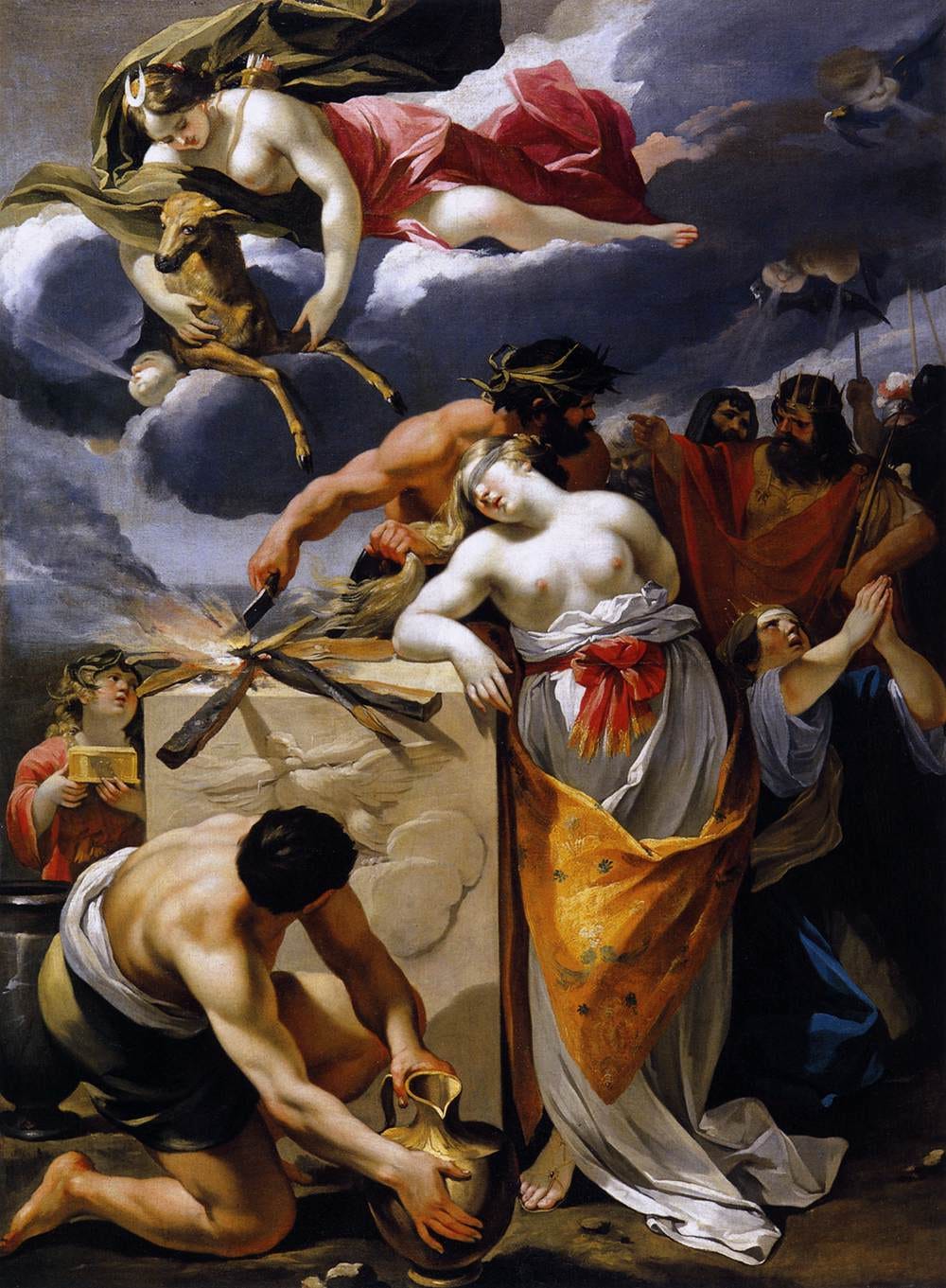
The Atreidai built their reign on a cycle of violence so great it reshaped the spirits of vengeance themselves. Hounded by the fates for the murder of his mother and her lover in retaliation for that of his own father, Orestes ran from the Erinyes until Athena herself was forced to intervene, breaking the cycle of violence that had claimed his forbears from Agamemnon to Atreus. It had claimed the life of his sister, too. When his father roused the Achaeans to make war on Troy, to avenge the insult to his brother Menalaus and ransom back his stolen bride, Agamemnon wagered the lives of his children, his wife and his own fate, a debt that would be paid in full.
For a famously warlike people, the Achaean warriors met the call to arms with great reluctance. When the bloodthirsty king came looking for Odysseus in Ithaca, the man of many turns feigned madness, breaking character only when Palamedes threatened to break the bones of his infant son under the blade of the plow. When they came for brave Achilles, who claimed in the Iliad that “no Trojan spearman ever stole my cattle,” the warrior is said to have masqueraded as a woman in the halls of King Lycomedes. In another time and another war, the comedian Aristophanes wrote of how the women of Athens and Sparta staged a sex strike to force an end of the Peloponnesian War. It would seem that the arts of draft dodging and creative war resistance are nearly as old as the institution itself, whatever its antiquity.
Having drafted a proper army to restore the honor of his aggrieved brother, Agamemnon’s fleet lay idle in the doldrums off the coast of their homeland. For the killing of a sacred deer, the warlord would need to pay the goddess Artemis with his own blood. The seer Colchys tells him that it is only through the death of his firstborn child that the vengeful goddess will call it even and raise the winds to send them off to foreign lands. The life of his daughter Iphegenia is weighed in the balance of his lust for war and it is hers that is found wanting. When Aeschylus relates the details of her sacrifice, even the chorus averts their eyes to the killing.
His debt paid, though not in full, the warlord sets sail for Troy. In his crimes against the citizens of Troy we see the barbarity that shapes the conquests of history, and in his trespass against his own child the ravages of war on the souls of those who wage it.
When the fighting is over, the war comes home, riding on the crimes of its generals. Agamemnon returns from overseas freighted with the lion’s share of the spoils of Troy and the last in a long line of unwilling concubines, this time the doomed Cassandra, a prophetess cursed by Apollo with the gift of foresight destined to be dismissed as the ravings of a lunatic. Despite her warnings, her captor is blind to the dangers. While he raped and pillaged his way around the walls of Troy, his wife Clytemnestra and her lover were plotting his demise. Murdered in his own bath, his death is an atonement for his sins abroad and those he had brought upon his own family. The pursuit of war brings him little besides vanity and plunder, and in the end the debt swallows his home and claims his own life as final payment. To paraphrase Malcolm X’s famous critique of imperialism, chickens will always come home to roost.
The tragic downfall of Agamemnon’s house would ultimately break the cycle of violence and provide the philosophical underpinnings of the movement for Athenian democracy. It is only through the weariness of the Greeks to the constant churning of strife and blood feuds that Athena is moved to transform the Erinyes, those ancient seeds of vengeance born of the severed scrotum of Ouranos, into the Eumenides-the good mind, the bringers of democracy. It is tempting to see this kind of metamorphosis as proof of the utility of war, of the regenerative power of destruction to act as fertilizer for the fruits of democracy and progress. For the Greeks, it may have seemed a steep but fair price to pay. Mired in darkness as they were, they had grown tired of the toll of vengeance, left with nothing but grief and debt from the foolhardy pursuits of their leaders.
For our people, it is the weight of history that saddles us with each new conquest. Mired in darkness as we are, we pray to crueler gods than Artemis and Zeus. In our time, it is war that endures. It fuels the fire of progress that swallows the light of the stars and apes the genesis of the sun itself, so bright it burns shadows into the earth. Like handprints cast onto the walls of caves, thousands of years ago.
We have learned nothing.

The quote is variously stated as “We have learned nothing in 12,000 years” or “After Altamira, all is decadence,” revealing that he may have been referring to Altamira Cave in Spain instead of Lascaux. But none of the quotes were ever properly attributed to him.
Excellent article, and it’s true that humans are a vicious, greedy, warlike lot. I would argue though that we want to do better. Look at the ‘Long Peace’ after the creation of the UN, and new ways of thinking about wellbeing and sustainability. There is hope for us yet!